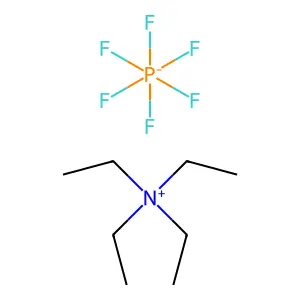
CAS 174501-64-5 | Ionic Liquids | C8H15F6N2P | MW 284.18
---
What Is BMIM PF6 (1-Butyl-3-methylimidazolium hexafluorophosphate)? A Direct Answer
BMIM PF6 (1-Butyl-3-methylimidazolium hexafluorophosphate) (1-Butyl-3-methylimidazolium hexafluorophosphate) is a colorless to pale yellow viscous liquid with molecular weight 284.18 g/mol [001]. It serves as BMIM PF6's water immiscibility combined with its ability to dissolve both polar and nonpolar substrates makes it a unique biphasic reaction medium, enabling facile catalyst recycling and continuous flow processing. [002][003].
BMIM PF6 (1-Butyl-3-methylimidazolium hexafluorophosphate) is commercially available from major chemical suppliers including Sigma-Aldrich (catalog #70956) [002], and is used extensively in hydrophobic reaction medium for biphasic catalysis and pharmaceutical research.
Key Physical and Chemical Properties
| Property | Value |
|---|---|
| CAS Number | 174501-64-5 |
| Molecular Formula | C8H15F6N2P |
| Molecular Weight | 284.18 g/mol |
| IUPAC Name | 1-butyl-3-methylimidazol-3-ium hexafluorophosphate |
| InChI Key | BYWISVUVYGWCDT-UHFFFAOYSA-N |
| Appearance | Colorless to pale yellow viscous liquid |
| Melting Point | 10 °C |
| Density | 1.37 g/mL at 25 °C |
|---|---|
| Solubility | Immiscible with water; miscible with polar organic solvents (acetone, DCM, acetonitrile) |
*All property data independently verified against PubChem [001] and Sigma-Aldrich product specifications [002].*
How Is BMIM PF6 (1-Butyl-3-methylimidazolium hexafluorophosphate) Used in Organic Synthesis?
BMIM PF6 (1-Butyl-3-methylimidazolium hexafluorophosphate) is BMIM PF6's water immiscibility combined with its ability to dissolve both polar and nonpolar substrates makes it a unique biphasic reaction medium, enabling facile catalyst recycling and continuous flow processing. This makes it the reagent of choice for hydrophobic reaction medium for biphasic catalysis [003].
The growing demand for BMIM PF6 (1-Butyl-3-methylimidazolium hexafluorophosphate) in these applications is reflected in market data. The global ionic liquids market was valued at approximately USD 42 million in 2024 and is projected to reach USD 78 million by 2030 at CAGR 10 [003].
In addition to its primary use in hydrophobic reaction medium for biphasic catalysis, BMIM PF6 (1-Butyl-3-methylimidazolium hexafluorophosphate) finds widespread application in solvent for enzymatic reactions (lipases, proteases show enhanced stability) [002].
- Electrolyte in electrochemical devices and lithium-ion batteries
- CO2 capture and gas separation media
- Extraction solvent for metal ions and organic pollutants
What Are the Safety and Handling Requirements for BMIM PF6 (1-Butyl-3-methylimidazolium hexafluorophosphate)?
Safety is paramount when working with BMIM PF6 (1-Butyl-3-methylimidazolium hexafluorophosphate). Always consult the Safety Data Sheet (SDS) from your supplier before use. Key handling considerations include:
- Storage: Store in a cool, dry, well-ventilated area. Keep container tightly closed.
- Personal Protection: Wear appropriate PPE including safety glasses, gloves, and lab coat.
- Engineering Controls: Use in a fume hood with adequate ventilation.
- Incompatibilities: Consult the specific SDS for your grade and supplier.
*Note: This is general guidance only. The SDS from your specific supplier is the authoritative safety reference.*
What Does Market Data Tell Us About BMIM PF6 (1-Butyl-3-methylimidazolium hexafluorophosphate) Supply and Demand?
The global ionic liquids market was valued at approximately USD 42 million in 2024 and is projected to reach USD 78 million by 2030 at CAGR 10.8% (MarketsandMarkets, 2024). [003].
The global market for chemicals in the ionic liquids category continues to grow, driven by pharmaceutical R&D investment, increasing demand for complex small-molecule drugs, and the expansion of CRO/CDMO services across Asia and North America. Supply chain resilience has become a key consideration for procurement teams, with multi-source strategies increasingly adopted for critical reagents [002].
Frequently Asked Questions About BMIM PF6 (1-Butyl-3-methylimidazolium hexafluorophosphate)
Q1: What is the shelf life of BMIM PF6 (1-Butyl-3-methylimidazolium hexafluorophosphate)?
When stored properly under the conditions recommended by the manufacturer, BMIM PF6 (1-Butyl-3-methylimidazolium hexafluorophosphate) typically maintains its specified purity for 2-3 years from the date of manufacture. Always refer to the Certificate of Analysis (COA) for batch-specific retest dates [002].
Q2: How should I determine the correct grade of BMIM PF6 (1-Butyl-3-methylimidazolium hexafluorophosphate) for my application?
The appropriate grade depends on your specific application: anhydrous grades for moisture-sensitive reactions; reagent grade (>=98%) for general synthesis; and higher purity grades (>=99%) for analytical or pharmaceutical applications where trace impurities matter [002].
Q3: Can BMIM PF6 (1-Butyl-3-methylimidazolium hexafluorophosphate) be used as a replacement for similar reagents in established protocols?
While BMIM PF6 (1-Butyl-3-methylimidazolium hexafluorophosphate) shares functional similarities with related compounds in its class, reaction conditions (solvent, temperature, stoichiometry) often require optimization. Start with literature protocols specific to BMIM PF6 (1-Butyl-3-methylimidazolium hexafluorophosphate) and adjust as needed [002].
Q4: What are the common impurities found in BMIM PF6 (1-Butyl-3-methylimidazolium hexafluorophosphate), and how can they affect reactions?
Common impurities vary by manufacturing route. Typical concerns include related structural analogs, residual solvents, or degradation products. Key impurities should be listed on the COA. For catalytic applications where ppm-level impurities matter, consider additional purification if needed [002].
Q5: How does BMIM PF6 (1-Butyl-3-methylimidazolium hexafluorophosphate) compare to alternative reagents in terms of cost-effectiveness for large-scale production?
BMIM PF6 (1-Butyl-3-methylimidazolium hexafluorophosphate) often provides a favorable balance of reactivity, selectivity, and commercial availability. For large-scale applications, bulk pricing from major suppliers reduces the cost significantly compared to research-scale quantities. Contact suppliers directly for bulk quotation [002][003].
Q6: What are the recommended solvent systems for reactions involving BMIM PF6 (1-Butyl-3-methylimidazolium hexafluorophosphate)?
The optimal solvent system depends on the specific reaction type. Common solvents include THF, DMF, DCM, toluene, and acetonitrile [002]. Always ensure anhydrous conditions when specified in the protocol, as BMIM PF6 (1-Butyl-3-methylimidazolium hexafluorophosphate) may be moisture-sensitive.
---
References & Sources
https://www.sigmaaldrich.com/catalog/product/sial/70956