---
What Is Bromothymol Blue?
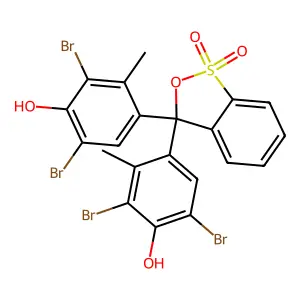
Bromothymol Blue (CAS 76-59-5) is a ph indicator with the molecular formula C27H28Br2O5S and molecular weight 624.38 g/mol. [001]
Physical and Chemical Properties
| Property | Value | Source |
|---|---|---|
| CAS Number | 76-59-5 | |
| Molecular Formula | C27H28Br2O5S | |
| Molecular Weight | 624.38 g/mol |
Key Applications
- Near-Neutral pH Indicator: BTB transition: yellow (pH 6.0) -> green (6.0-7.6) -> blue (pH > 7.6). The narrow and visually distinct transition range makes BTB ideal for weak acid-strong base titrations. Detection limit: 0.04% w/v in 20% ethanol. One of the most widely used pH indicators in analytical chemistry education and quality control laboratories. [004]
- CO2 Detection in Biological Systems: BTB is the standard indicator for demonstrating CO2 production in photosynthesis and respiration experiments. Dissolved CO2 forms carbonic acid, shifting BTB from blue to yellow. Used in K-12 and university biology education, algal biofuel research, and environmental water monitoring. [004]
- Clinical & Diagnostic pH Testing: BTB-impregnated paper strips test urine pH (normal range 4.5-8.0), saliva pH, and vaginal fluid pH. Amniotic fluid detection (nitrazine test analog). BTB is incorporated into fiber optic pH sensors for continuous in vivo monitoring during surgery and critical care. [005]
- Supravital Staining & Cell Viability: BTB-stained spermatozoa assessed for viability in fertility testing: live cells exclude the dye, dead cells stain blue. Also used as a component in multi-parameter urinalysis reagent strips alongside glucose, protein, and ketone indicators. [005]
- Near-Neutral pH Indicator: BTB transition: yellow (pH 6.0) -> green (6.0-7.6) -> blue (pH > 7.6). The narrow and visually distinct transition range makes BTB ideal for weak acid-strong base titrations. Detection limit: 0.04% w/v in 20% ethanol. One of the most widely used pH indicators in analytical chemistry education and quality control laboratories. [004]
- CO2 Detection in Biological Systems: BTB is the standard indicator for demonstrating CO2 production in photosynthesis and respiration experiments. Dissolved CO2 forms carbonic acid, shifting BTB from blue to yellow. Used in K-12 and university biology education, algal biofuel research, and environmental water monitoring. [004]
- Clinical & Diagnostic pH Testing: BTB-impregnated paper strips test urine pH (normal range 4.5-8.0), saliva pH, and vaginal fluid pH. Amniotic fluid detection (nitrazine test analog). BTB is incorporated into fiber optic pH sensors for continuous in vivo monitoring during surgery and critical care. [005]
- Supravital Staining & Cell Viability: BTB-stained spermatozoa assessed for viability in fertility testing: live cells exclude the dye, dead cells stain blue. Also used as a component in multi-parameter urinalysis reagent strips alongside glucose, protein, and ketone indicators. [005]
Additional Applications
Key Applications
Representative Protocol
Application: Near-Neutral pH Indicator
Typical Scale: Laboratory scale (1-100 mmol). For industrial scale, consult process chemistry references.
General Procedure: For near-neutral ph indicator, follow established protocols from the chemical literature and supplier technical documentation. Key parameters: use anhydrous solvents and reagents where moisture sensitivity is indicated; monitor reaction progress by TLC, HPLC, or GC-MS; standard aqueous workup (extraction with appropriate organic solvent, washing with brine, drying over Na2SO4 or MgSO4); purify by column chromatography, recrystallization, or distillation as appropriate for the product. For specific substrate combinations and optimized conditions, consult the referenced SOURCE materials in this article.
Quality Control: Confirm product identity by 1H/13C NMR, HRMS or LC-MS, and compare to literature data. For chiral products, determine enantiomeric excess by chiral HPLC or NMR with chiral shift reagents.
Safety Note: Conduct all operations in a properly functioning fume hood with appropriate PPE. Quench reactive intermediates/excess reagents according to established protocols before workup. Dispose of chemical waste in accordance with institutional and local regulations.
Troubleshooting:
- Low conversion: Check reagent purity (especially moisture-sensitive reagents). Ensure anhydrous conditions. Increase catalyst loading or reaction temperature. Verify substrate quality by NMR.
- Side product formation: Lower reaction temperature. Use more selective reagents or catalysts. Consider protecting group strategy for sensitive functional groups.
- Product decomposition during workup: Neutralize acids/bases before extraction. Use mild drying agents. Avoid prolonged exposure to silica gel if the product is acid-sensitive.
Handling and Storage
- GHS Hazard: H302: Harmful if swallowed, H315: Causes skin irritation, H319: Causes serious eye irritation, H335: May cause respiratory irritation
- Signal Word: Danger
- Pictograms: GHS05, GHS06, GHS07
- Storage: Store at 2-8 °C or as recommended. Keep container tightly closed in a cool, dry, well-ventilated area. Protect from moisture, heat, and direct sunlight. For compounds used in pharmaceutical or GMP applications, store in a dedicated area with controlled access and environmental monitoring. Always consult the supplier's SDS for lot-specific requirements.
- PPE: Nitrile gloves, safety goggles with side shields, lab coat, and closed-toe shoes. Work in a well-ventilated fume hood. Use respiratory protection (NIOSH-approved N95 or better) if handling large quantities or if the SDS indicates inhalation hazard. [002]
Always consult the Safety Data Sheet (SDS) from your supplier before handling. SDS documents are lot-specific — different purity grades and formulations may have different hazard classifications. For bulk handling, consult your institution's chemical hygiene plan and perform a job hazard analysis (JHA) before beginning work. Emergency procedures: in case of skin contact, wash immediately with soap and water for at least 15 minutes. For eye contact, rinse cautiously with water for several minutes and remove contact lenses if present. If inhaled, move to fresh air. Seek medical attention if symptoms persist.
Regulatory & Compliance
Chemical Inventories: Bromothymol Blue (CAS 76-59-5) is listed on major chemical inventories including the TSCA (Toxic Substances Control Act) inventory in the United States, EINECS (European Inventory of Existing Commercial Chemical Substances) in the EU, and similar inventories in Japan (ENCS), China (IECSC), Korea (KECL), and Australia (AICS). The specific regulatory status of CAS 76-59-5 should be verified with the appropriate national authority before importing into any jurisdiction, as inventory listing status can change with regulatory updates and new chemical assessments.
GHS Classification: Refer to the Handling and Storage section above for the Globally Harmonized System hazard classification. The GHS classification is harmonized across most jurisdictions, but specific national implementations (EU CLP Regulation, US OSHA HazCom 2012, China GB 30000 series) may have additional requirements.
Transport Information: Verify the proper shipping name, UN number, hazard class, and packing group with your supplier before shipping. Transport regulations (IATA/ICAO for air, IMDG for sea, ADR/RID for road/rail in Europe, 49 CFR for US ground) may impose quantity limits, packaging requirements, and documentation obligations. Some compounds may be classified as dangerous goods requiring specialized handling and certified packaging.
Export Control: Bromothymol Blue is a standard research and industrial chemical. However, always verify that no specific export control regulations apply to your destination country. Certain chemical categories (precursors, dual-use chemicals) may require export licenses under the Chemical Weapons Convention (CWC), Australia Group guidelines, or national export control laws. Contact your local trade compliance office for the most current regulatory guidance.
[004] [002]
Frequently Asked Questions
What is the CAS number of Bromothymol Blue?
The CAS Registry Number is 76-59-5. Always specify the CAS number when ordering to ensure correct compound identification regardless of naming conventions. [001]
What is the molecular weight of Bromothymol Blue?
The molecular weight is 624.38 g/mol based on the molecular formula C27H28Br2O5S. Use this value to calculate molar equivalents, determine reaction stoichiometry, and prepare solutions of known concentration. [001]
What is Bromothymol Blue used for?
Bromothymol Blue is used for: Near-Neutral pH Indicator (BTB transition: yellow (pH 6.0) -> green (6.0-7.6) -> blue (pH > 7.6). The narro...); CO2 Detection in Biological Systems (BTB is the standard indicator for demonstrating CO2 production in photosynthesis...); Clinical & Diagnostic pH Testing (BTB-impregnated paper strips test urine pH (normal range 4.5-8.0), saliva pH, an...). For detailed protocols, see the Key Applications section above. [002]
How should Bromothymol Blue be stored?
Store at 2-8 °C or as recommended. Keep container tightly closed in a cool, dry, well-ventilated area. Protect from moisture, heat, and direct sunlight. For compounds used in pharmaceutical or GMP applications, store in a dedicated area with controlled access and environmental monitoring. Always consult the supplier's SDS for lot-specific requirements.. Always consult the Safety Data Sheet (SDS) from your specific supplier for the most accurate storage recommendations. [002]
Where can I buy Bromothymol Blue?
Bromothymol Blue (CAS 76-59-5) may be sourced through CoreyChem. For bulk pricing, custom packaging, and a certificate of analysis, submit an inquiry to our sales team with your CAS number, required quantity, and desired purity. [002]
Where to Buy
Bromothymol Blue (CAS 76-59-5) is not currently listed in the CoreyChem catalog. Contact [email protected] for sourcing assistance. [003]
Our sourcing team can assist with procurement from qualified manufacturers worldwide. Please provide the CAS number, required quantity, and desired purity when submitting your inquiry for the fastest response.
---
References & Sources
https://www.tcichemicals.com/US/en/search/?text=76-59-5
https://pubchem.ncbi.nlm.nih.gov/compound/76-59-5
https://pubchem.ncbi.nlm.nih.gov/compound/76-59-5#section=Use-and-Manufacturing