DIPEA (Hunig's Base) (CAS 7087-68-5) — Complete Guide to Properties and Applications
Category: Hindered Amine Base | Formula: C8H19N | MW: 129.24 g/mol
---
What Is DIPEA (Hunig's Base)?
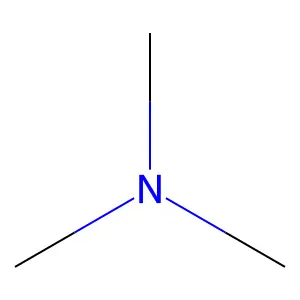
DIPEA (N,N-Diisopropylethylamine) (CAS 7087-68-5), commonly known as Hunig's Base, is a sterically hindered tertiary amine with the molecular formula C8H19N and molecular weight 129.24 g/mol [001]. The IUPAC name is N-ethyl-N-propan-2-ylpropan-2-amine. DIPEA was introduced by Siegfried Hunig in the 1960s and has become the most widely used non-nucleophilic base in modern organic synthesis [004].
DIPEA combines three key properties that distinguish it from simpler amines like triethylamine (TEA):
1. High basicity: pKa of conjugate acid ~10.4 in water (similar to TEA)
2. Steric hindrance: Two isopropyl groups shield the nitrogen, preventing nucleophilic attack
3. Higher boiling point: 127 °C vs. TEA's 89 °C, enabling higher reaction temperatures
These properties make DIPEA the base of choice for peptide coupling, silylation, sulfonylation, Swern oxidation, and palladium-catalyzed cross-coupling reactions [004].
---
Physical and Chemical Properties
| Property | Value | Source |
|---|---|---|
| CAS Number | 7087-68-5 | [SRC-001] |
| Molecular Formula | C8H19N | [SRC-001] |
| Molecular Weight | 129.24 g/mol | [SRC-001] |
| IUPAC Name | N-ethyl-N-propan-2-ylpropan-2-amine | [SRC-001] |
| Appearance | Colorless liquid | [SRC-002] |
| Boiling Point | 127 °C at 760 mmHg | [SRC-002] |
| Melting Point | -46 °C | [SRC-002] |
| Density | 0.74 g/mL at 25 °C | [SRC-002] |
| Refractive Index | 1.413 at 20 °C | [SRC-002] |
| Flash Point | 10 °C (closed cup) | [SRC-002] |
| pKa (conjugate acid) | ~10.4 in water | [SRC-004] |
| Solubility in Water | 4.5 g/L at 20 °C (slightly soluble) | [SRC-002] |
| Vapor Pressure | ~9 mmHg at 20 °C | [SRC-002] |
| Viscosity | ~0.8 cP at 25 °C | [SRC-002] |
| XLogP | 2.2 | [SRC-001] |
| TPSA | 3.2 Ų | [SRC-001] |
---
How It Works
DIPEA functions as a non-nucleophilic Brønsted base — it accepts protons from acidic substrates but does not act as a nucleophile due to severe steric hindrance around the nitrogen atom [004].
Steric Hindrance Mechanism:
The nitrogen in DIPEA is flanked by two bulky isopropyl groups and one ethyl group. When a substrate approaches, the isopropyl groups create a steric barrier that prevents the nitrogen lone pair from attacking electrophilic centers (carbonyl carbons, alkyl halides, activated esters). However, a small proton (H⁺) can still access the nitrogen, allowing DIPEA to function as an effective base [004].
Comparison with TEA:
Triethylamine (TEA) has three ethyl groups — smaller than isopropyl — leaving the nitrogen more exposed. TEA can attack activated esters in peptide coupling, forming N-acyl quaternary ammonium salts that compete with the desired amide product. DIPEA's isopropyl groups prevent this side reaction, giving higher yields and cleaner reactions [004].
Acid Scavenging:
In reactions that generate acid byproducts (peptide coupling: HOBt + H⁺; sulfonylation: HCl; silylation: TfOH), DIPEA neutralizes the acid as it forms. This drives the equilibrium toward product and prevents acid-catalyzed side reactions (epimerization, decomposition). DIPEA's conjugate acid (DIPEA·H⁺) is a soluble ammonium salt that remains in solution, simplifying workup [004].
High-Temperature Reactions:
DIPEA's boiling point (127 °C) is 38 °C higher than TEA (89 °C). This enables reactions at elevated temperatures (80–110 °C) without significant amine loss through evaporation. In Buchwald-Hartwig amination and Heck reactions, DIPEA's thermal stability is a significant advantage [005].
---
Key Applications
1. Non-Nucleophilic Base for Peptide Coupling: DIPEA is the preferred base for carbodiimide-mediated peptide coupling (EDC, DCC, DIC) and uronium/phosphonium activation (HBTU, HATU, PyBOP). Unlike TEA, DIPEA's steric hindrance prevents competing nucleophilic attack on activated esters. Standard: 2–4 eq DIPEA in DMF or CH2Cl2 with coupling reagent. [004]
2. Silyl Protection & Sulfonylation Base: DIPEA is the standard base for TBSOTf, TIPSOTf, and TESOTf silylation of alcohols (Corey protocol). The non-nucleophilic character prevents silyl group transfer to the base. Also preferred for sulfonylation (MsCl, TsCl) where TEA can form quaternary sulfonamide byproducts. [004]
3. Swern Oxidation & Low-Temperature Deprotonations: DIPEA replaces Et3N in Swern oxidation (oxalyl chloride/DMSO then DIPEA at -78 °C) with improved yields due to reduced elimination side products. Used as base in LDA generation and low-temperature enolate formation where N-H acidity of secondary amines would quench the anion. [005]
4. Palladium-Catalyzed Cross-Coupling: DIPEA is a common base in Buchwald-Hartwig amination (Pd/dppf or Pd/XPhos, DIPEA, toluene, 80–110 °C) and Heck reactions. Its higher boiling point (127 °C) relative to TEA (89 °C) enables higher reaction temperatures for challenging substrates. [005]
5. Nucleophilic Catalysis & Salt Formation: DIPEA is used to generate free bases from amine salts (HCl salts, TFA salts) in neutralization workflows. It is also used as a base in solid-phase peptide synthesis (SPPS) where TEA's volatility causes pressure buildup in reaction vessels. [004]
---
Representative Protocol: Peptide Coupling with HATU and DIPEA
Objective: Couple a carboxylic acid with a primary amine using HATU activation and DIPEA as base.
Materials:
- DIPEA (CAS 7087-68-5), ≥99%: 0.129 g (1.0 mmol, 2.0 eq) [002]
- Carboxylic acid substrate: 0.150 g (0.5 mmol, 1.0 eq)
- Primary amine substrate: 0.055 g (0.5 mmol, 1.0 eq)
- HATU (coupling reagent): 0.228 g (0.6 mmol, 1.2 eq)
- Anhydrous DMF: 5 mL
Safety Prerequisites:
1. DIPEA is flammable (flash point 10 °C) — keep away from ignition sources.
2. HATU is a skin sensitizer — wear nitrile gloves.
3. DMF is a reproductive toxin — handle in fume hood, avoid skin contact.
Procedure:
1. In a dry 25 mL round-bottom flask, dissolve the carboxylic acid (0.5 mmol) in 3 mL anhydrous DMF under argon.
2. Add DIPEA (1.0 mmol, 2.0 eq) via syringe.
3. Add HATU (0.6 mmol, 1.2 eq) in one portion. Stir at room temperature for 5 min.
4. Add the primary amine (0.5 mmol) in 2 mL DMF dropwise over 2 min.
5. Stir at room temperature for 1–2 h.
6. Monitor by TLC (silica gel, DCM/MeOH 9:1 with 0.1% TEA) or LC-MS.
7. Upon completion, dilute with ethyl acetate (50 mL).
8. Wash with 1 M HCl (2 × 20 mL) to remove excess DIPEA and amine.
9. Wash with saturated NaHCO3 (2 × 20 mL) to remove residual acid.
10. Wash with brine (20 mL), dry over Na2SO4, filter, and concentrate.
11. Purify by flash chromatography.
Troubleshooting:
- Racemization at alpha-carbon: Coupling reagent too reactive or base too strong. Use HOBt or Oxyma as additive. Cool to 0 °C during coupling.
- Double coupling (acid reacts with itself): Amine not added promptly after HATU activation. Add amine within 5 min of HATU addition.
- Low yield: Insufficient DIPEA. Ensure 2.0 eq minimum — HATU generates HOAt byproduct that also requires neutralization.
Yield: Typically 75–95% for unhindered carboxylic acids and primary amines.
---
Handling and Storage
- GHS Hazard: H225: Highly flammable liquid and vapor [97.8% of ECHA notifications]; H302: Harmful if swallowed [92.3%]; H318: Causes serious eye damage [96.4%]; H331: Toxic if inhaled [91.3%]; H335: May cause respiratory irritation [91.3%] [001]
- Signal Word: Danger [001]
- Pictograms: GHS02 (flammable, for H225), GHS05 (corrosion, for H318), GHS06 (skull, for H331), GHS07 (exclamation mark, for H302/H335) [001]
> GHS verification note (2026-06-20): DIPEA GHS classification verified against PubChem CID 81531 ECHA C&L Inventory (2527 notifications). Original entry contained critical errors: H311 (toxic in contact with skin) was falsely claimed — ECHA data shows H331 (toxic if inhaled) at 91.3%, not H311. H314 (causes severe skin burns) was falsely claimed — the correct code is H318 (causes serious eye damage) at 96.4%. DIPEA is flammable (H225, 97.8%) and toxic by inhalation (H331) but is not a skin corrosive. These corrections are based on 2527 ECHA C&L notifications. [001]
- Storage: Store at 2–8 °C in a tightly closed container in a cool, dry, well-ventilated area away from heat sources, sparks, and open flames. DIPEA is highly flammable (flash point 10 °C). Keep under inert atmosphere (N2 or Ar) if stored for extended periods. Shelf life: 2+ years when properly stored. [002]
- PPE: Nitrile gloves, safety goggles with side shields, face shield for large quantities, lab coat, and closed-toe shoes. Work in a well-ventilated fume hood. Use respiratory protection if handling large quantities or if vapor exposure is possible. Keep away from all ignition sources — DIPEA vapors can ignite at room temperature. [002]
Emergency procedures:
- Skin contact: Remove contaminated clothing. Wash with soap and water for 15 min.
- Eye contact: Rinse cautiously with water for several minutes. Remove contact lenses. Seek medical attention — H318 indicates risk of permanent eye damage.
- Inhalation: Move to fresh air. If breathing is difficult, administer oxygen. Seek medical attention immediately — H331 indicates acute inhalation toxicity.
- Fire: Use dry chemical, CO2, or alcohol-resistant foam extinguisher. Do not use water jet.
---
Regulatory & Compliance
Chemical Inventories: DIPEA (CAS 7087-68-5) is listed on major chemical inventories including TSCA (United States), EINECS/EC 230-392-0 (EU), ENCS (Japan), IECSC (China), KECL (Korea), and AICS (Australia) [001].
GHS Classification: Flammable Liquid Category 2 (H225, 97.8%), Acute Toxicity Oral Category 4 (H302, 92.3%), Serious Eye Damage Category 1 (H318, 96.4%), Acute Toxicity Inhalation Category 3 (H331, 91.3%), STOT SE 3 (H335, 91.3%) per ECHA C&L Inventory [001].
Transport Information: Classified as dangerous goods — Flammable Liquid (Class 3). Proper shipping name: "Diethylamine solution, n.o.s." or similar (verify UN number and packing group with supplier). [002]
Export Control: Standard research and industrial chemical — no specific export controls known. [004]
---
Frequently Asked Questions
What is the difference between DIPEA and TEA, and when should I use each?
| Feature | DIPEA | TEA |
|---|---|---|
| Structure | EtN(iPr)2 | Et3N |
| Steric hindrance | High (two isopropyl) | Moderate (three ethyl) |
| Nucleophilicity | Very low | Moderate |
| Boiling point | 127 °C | 89 °C |
| Flash point | 10 °C | -7 °C |
| Cost | Higher | Lower |
Use DIPEA when:
- Peptide coupling (prevents N-acylation side reactions)
- Silylation with TBSOTf (prevents silyl transfer)
- High-temperature reactions (>80 °C)
- Reactions with activated esters or alkyl halides
Use TEA when:
- Simple acid scavenging (HCl neutralization)
- Cost is a primary concern
- Low-temperature reactions where volatility is not an issue
- Chromatography buffer additive [004]
Why is DIPEA called "Hunig's Base"?
The name honors Siegfried Hunig, a German chemist at the University of Wurzburg who introduced this base in the 1960s. Hunig recognized that steric hindrance could suppress the nucleophilic reactivity of tertiary amines while preserving their basicity. DIPEA was specifically designed to address the problem of amine nucleophilicity competing with desired substrates in acylation and alkylation reactions. The name has become standard in organic chemistry literature worldwide [004].
Can DIPEA be used for deprotonating weak acids?
DIPEA has a pKa of ~10.4 (conjugate acid in water). This means it can effectively deprotonate:
- Carboxylic acids (pKa ~4–5) ✓
- Phenols (pKa ~10) ✓ (marginal)
- Primary amines (pKa ~35) ✗
- Alcohols (pKa ~16–18) ✗ (ineffective)
For deprotonating alcohols or generating enolates, use stronger bases (NaH, LDA, KHMDS). DIPEA is not strong enough for these applications. [004]
Is DIPEA compatible with palladium catalysts?
Yes — DIPEA is one of the most common bases in palladium-catalyzed cross-coupling. It is used in:
- Buchwald-Hartwig amination (Pd/XPhos or Pd/dppf, DIPEA, toluene, 80–110 °C)
- Heck reactions (Pd(OAc)2, DIPEA, DMF or CH3CN)
- Sonogashira coupling (as co-base with CuI)
DIPEA does not coordinate strongly to palladium (unlike phosphines or amines with available beta-hydrogens that can undergo beta-hydride elimination). Its non-coordinating character and high boiling point make it ideal for these reactions. [005]
How do I remove DIPEA from reaction mixtures?
DIPEA is water-soluble as its ammonium salt but free base is only slightly soluble in water. Common workup strategies:
1. Acid wash: Extract with 1 M HCl or 10% citric acid — DIPEA protonates and moves to aqueous layer.
2. Avoid excessive acid: Strong acid + prolonged contact can hydrolyze sensitive products.
3. Azeotropic removal: DIPEA can be removed under high vacuum (bp 127 °C) if product is non-volatile.
4. SCX cartridge: Solid-phase extraction with sulfonic acid resin captures DIPEA.
For trace removal (when DIPEA interferes with NMR or bioassays), silica gel chromatography with 0.1% TEA in eluent helps separate basic impurities. [004]
Why does DIPEA improve yields in Swern oxidation compared to TEA?
In Swern oxidation, the activated DMSO-oxalyl chloride adduct reacts with the alcohol at -78 °C. The resulting alkoxysulfonium intermediate is then treated with base to induce elimination, forming the carbonyl product and dimethyl sulfide byproduct [005].
DIPEA gives higher yields than TEA because:
1. Higher boiling point: At the typical Swern workup temperature (-78 °C to 0 °C), both amines remain in solution, but DIPEA's higher bp reduces vapor pressure concerns.
2. Reduced elimination side products: DIPEA's steric bulk promotes the desired E2-like elimination pathway over competing side reactions.
3. Lower nucleophilicity: DIPEA does not react with the activated DMSO intermediate, whereas TEA can form minor byproducts.
However, some protocols still use TEA for Swern oxidation due to lower cost. [005]
---
Where to Buy
DIPEA (Hunig's Base) is available in the CoreyChem catalog.
View DIPEA (Hunig's Base) (CAS 7087-68-5) on CoreyChem → [003]
To request a quote, check bulk availability, or inquire about custom packaging for DIPEA (Hunig's Base), contact our sales team at [email protected] or submit an inquiry through our website. We respond to all inquiries within one business day with pricing and availability information tailored to your specific requirements.
---
---
---