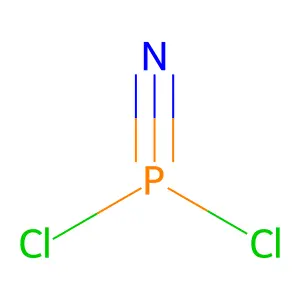
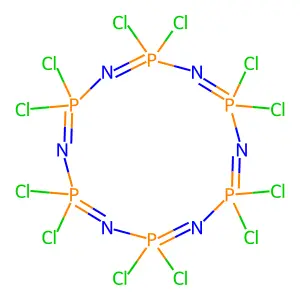
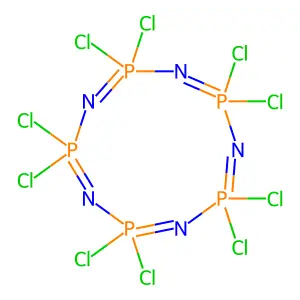
In 2022, *Molecules* (MDPI) published a comprehensive 35-page review systematically mapping the biomedical landscape of cyclophosphazenes and polyphosphazenes—"Cyclo- and Polyphosphazenes for Biomedical Applications" [SRC-001]. This review brought to light a fact long overlooked by mainstream medicinal chemistry: cyclophosphazene compounds with P-N alternating backbones possess intrinsic, multidimensional biological activity.
They are not inert "carriers" but pharmacologically active molecular scaffolds in their own right. Their bioactivity mechanisms span four core domains:
1. DNA targeting — Specific binding to A/A and G/G nucleotide sequences, altering DNA conformation [SRC-001]
2. Tubulin interaction — Colchicine-like mechanism at the tubulin-binding cavity [SRC-001]
3. Apoptosis pathway activation — Inducing tumor cell death through Bcl-2, p-53, and Caspase-3 signaling [SRC-001]
4. Broad-spectrum antimicrobial activity — Inhibition of Gram-positive and Gram-negative bacteria and fungi, with select derivatives outperforming clinical reference drugs ketoconazole and ciprofloxacin [SRC-001, SRC-002]
More importantly—cyclotetraphosphazene (OCCP) has demonstrated superior bioactivity over cyclotriphosphazene (HCCP) in multiple independent studies.
The Global Oncology Market: A Trillion-Dollar Certainty
Oncology is the single largest therapeutic area in the global pharmaceutical market. The worldwide oncology drugs market was valued at approximately USD 178 billion in 2024 and is projected to reach USD 521 billion by 2032 [SRC-003]. Small-molecule targeted therapies represent one of the fastest-growing segments.
At the industry level, this means any anticancer candidate compound with a novel mechanism of action or a new molecular scaffold carries clear commercial translation value. OCCP, as a "nitrogen-rich heterocyclic scaffold" that mainstream medicinal chemistry has yet to fully explore, sits at a critical window between academic discovery and industrial attention.
OCCP Derivative Bioactivity: Published Experimental Evidence
1. Anticancer Activity — Validated Across Multiple Tumor Cell Lines
(A) Spirocyclic Cyclotetraphosphazenes — Cervical and Breast Cancer
In 2016, Işıklan et al. used octachlorocyclotetraphosphazene as the starting material to synthesize mono-spiro, di-spiro, and tetra-spiro cyclotetraphosphazene derivatives, evaluating cytotoxicity against HeLa (human cervical carcinoma), MCF-7 (human breast cancer), and L929 (mouse fibroblast) cell lines [SRC-004]. This was among the first systematic studies of OCCP derivative anticancer activity.
(B) Diansa-Spiro-Cyclotetraphosphazenes — Triple-Negative Breast Cancer and DNA Cleavage
In 2022, the Kılıç group at Ankara University reported in *New Journal of Chemistry* (RSC) the synthesis of ferrocenyl-functionalized diansa-spiro-cyclotetraphosphazenes (compounds 3 and 4) directly from OCCP, with MTT cytotoxicity assays against MDA-MB-231 (triple-negative breast cancer) and COS-1 (mammalian fibroblast) cell lines [SRC-002].
Even more compelling were the DNA interaction experiments: compound 4 caused pBR322 plasmid DNA cleavage at the lowest concentration tested and inhibited enzymatic digestion by both HindIII and BamHI restriction endonucleases—indicating specific binding to A/A nucleotide sequences of DNA [SRC-002]. This dual "DNA cleavage + enzymatic inhibition" effect is remarkably rare among small organic molecules.
(C) Ferrocenyl Cyclotetraphosphazenes — Synergistic Antituberculosis and Cytotoxic Activity
The 2022 *Molecules* review explicitly states: "trimers and tetramers bearing N/O donor-type bidentate ligands containing a mono-ferrocenyl group have been shown to demonstrate antituberculosis and cytotoxic activity" [SRC-001]. Tetrameric cyclotetraphosphazene derivatives performed particularly well in antituberculosis screening.
2. Antimicrobial Activity — Tetramer Outperforms Trimer
A key statement in the *Molecules* review: "Tetramers similar to compound (c) showed greater inhibitory activity against K. Pneumonia, C. tropicalis, and C. albicans" [SRC-001]. Here, "tetramers" explicitly refers to cyclotetraphosphazene derivatives.
Specific antimicrobial data [SRC-002]:
- MIC values ranging from 2500–312.5 μM against *S. aureus*, *P. aeruginosa*, *E. coli*, and *B. subtilis*
- Select tetrapyrrolidino derivatives exhibited superior activity against C. albicans and C. tropicalis compared to the clinical antifungal ketoconazole [SRC-001]
3. OCCP vs. HCCP: Why Does the Tetramer Show Stronger Bioactivity?
| Dimension | HCCP (Trimer) | OCCP (Tetramer) | Bioactivity Implication |
|---|---|---|---|
| Substitutable sites | 6 | **8** | More biological targets per molecule |
| Maximum chiral centers | 3 | **4** | Chiral diversity = bioactivity diversity |
| Ring size | 6-membered | **8-membered** | Larger molecular surface area → stronger DNA groove binding |
| Conformational flexibility | Low | **Higher** | Enhanced "induced fit" for diverse biological targets |
| Antimicrobial literature | Widely reported | **Stronger against specific strains** | Tetramer has intrinsic advantages at certain targets |
Beyond the Drug Itself: OCCP in Smart Drug Delivery
Beyond the intrinsic pharmacological activity of OCCP derivatives, cyclophosphazene chemistry in drug delivery is equally compelling—and this may be OCCP's most differentiated application space:
(A) pH-Responsive Drug Release
The tumor microenvironment is mildly acidic (pH 6.5–6.8) compared to normal tissue (pH 7.4). pH-responsive drug carriers designed to exploit this difference can selectively release drugs at tumor sites, minimizing systemic toxicity. The P-N backbone of cyclophosphazenes undergoes controlled hydrolysis under acidic conditions, providing a natural mechanism for pH-responsive release [SRC-001].
TEMPO-radical-containing cyclophosphazene microspheres released 41% of camptothecin at pH 4.0 versus only 32.6% at pH 7.4—directly validating the pH-responsive character of the phosphazene scaffold [SRC-001].
(B) Self-Assembled Nanocarriers
Cyclophosphazene-oligopeptide conjugates self-assemble in aqueous solution into micelles (critical micelle concentration as low as ~0.1 mg/L) or polymersomes for encapsulating hydrophobic anticancer drugs such as doxorubicin and paclitaxel. The rigidity of the cyclophosphazene core and its multiple peripheral arms provide unique structural guidance for self-assembly [SRC-001].
(C) OCCP's 8-Arm Advantage in Drug Delivery
OCCP's eight substitution sites enable the simultaneous attachment, on a single molecular platform, of:
- Targeting ligands (e.g., folate, targeting folate receptors overexpressed on tumor cells)
- Hydrophilic segments (e.g., PEG, extending blood circulation time)
- Drug molecules (via degradable linkages, enabling prodrug strategies)
- Imaging probes (e.g., fluorophores, enabling theranostic integration)
This "one-molecule, multiple functions" drug delivery design philosophy is limited by functional group count on HCCP's 6-arm platform, while OCCP's 8-arm platform provides substantially expanded design space.
Commercialization Pathway: From Niche Research Reagent to Pharmaceutical Intermediate
We must be candid: OCCP-derived compounds are a long way from becoming marketed drugs. The average journey from lead compound to regulatory approval spans 10–15 years and over one billion dollars.
However, viewed through the research chemical → pharmaceutical intermediate value chain, OCCP has a clear commercialization pathway:
1. Academic screening: As a novel heterocyclic scaffold for medicinal chemistry groups conducting preliminary activity assessment—this is the most immediate demand
2. CRO/CDMO medicinal chemistry services: Contract research organizations need diverse molecular building blocks to construct compound libraries—OCCP's 8 derivatizable sites make it an ideal starting material for diversity-oriented synthesis
3. Lead optimization: If an OCCP derivative demonstrates outstanding activity and selectivity in screening, demand will leap from milligram to gram and kilogram scales
Why Now? Three Demand Signals
Signal 1: The 2022 Molecules Review Marks Official Recognition of "Phosphazene Medicinal Chemistry"
A 35-page systematic review in *Molecules* comprehensively covered cyclophosphazenes and polyphosphazenes across four biomedical domains: antimicrobial, anticancer, drug delivery, and immunoadjuvant applications [SRC-001]. This represents the field's transition from fragmentary exploration to systematic summation—typically signaling that academic consensus has formed and accelerated research is the next phase.
Signal 2: OCCP's Unique Bioactivity Remains Systematically Unexplored
The *Molecules* review explicitly notes that tetramers outperform trimers in certain contexts, yet the reasons—larger ring size? More chiral centers? Stronger DNA groove binding?—remain unelucidated. This means any research group deciding to systematically investigate OCCP's bioactivity structure-activity relationships could produce high-impact publications.
Signal 3: The Pharmaceutical Industry's "New Scaffold Hunger"
The global pharmaceutical industry faces a severe "patentable chemical space depletion" problem. Over 80% of molecular scaffolds in large pharma compound libraries belong to fewer than 100 "privileged structures." Cyclophosphazene's inorganic-organic hybrid P-N skeleton is an exceptionally rare molecular type in these libraries—precisely the "new chemical space" that medicinal chemists most urgently seek.
🛒 Product Featured in This Article
🛒 Product Featured in This Article
Octachlorocyclotetraphosphazene (CAS 2950-45-0)
Formula: Cl₈N₄P₄ | MW: 459.66 | Purity: ≥98%
100 kg to metric-ton stable supply
🛒 Product Featured
Octachlorocyclotetraphosphazene (CAS 2950-45-0)
Formula: Cl₈N₄P₄ | MW: 459.66 | Purity: ≥98%
100 kg to metric-ton stable supply
Take Action: Medicinal Chemistry's Nitrogen-Rich New Scaffold Starts with OCCP
CoreyChem (Career Henan Chemical Co.) operates a mature production process for octachlorocyclotetraphosphazene, from gram to metric-ton scale.
- 🏭 100 kg to ton-scale stable supply — In-house production
- 💰 Cost-efficient process — Optimized CoCl₂-catalyzed route
- 🔬 Batch-to-batch consistency — COA included, HPLC/GC/³¹P NMR available
- 🧪 Academic collaboration fast track — Priority samples
We invite research teams and companies in the following areas:
- Anticancer/antimicrobial bioactive molecule design and synthesis
- DNA-targeting small-molecule structure-activity relationship studies
- Phosphazene-based drug delivery systems (micelles, nanospheres, hydrogels)
- Diversity-oriented synthesis building block requirements
- CRO/CDMO medicinal chemistry services
The next privileged scaffold in oncology may lie behind 8 P-Cl bonds.
- 📧 Email: [email protected]
- 📞 Tel: +86-0371-86658258
- 🌐 Product Page: https://www.careerchemical.com/product/2950-45-0