Metal-Organic Frameworks (MOFs) have been called "one of the most important breakthroughs in chemistry over the past two decades" by *Science* magazine. These materials are three-dimensional crystalline porous networks assembled from metal ions (or clusters) and organic ligands through coordination bonds, with pore sizes precisely tunable from 0.3 to 10 nanometers. A single gram of a typical MOF can possess a surface area exceeding 7,000 square meters—the equivalent of a football field folded into a teaspoon of powder [SRC-001].
This is not academic curiosity. MOFs have entered the fast lane of industrialization. The global MOF market was valued at approximately USD 0.51 billion in 2024 and is projected to reach USD 1.70 billion by 2030, growing at a CAGR of 22% [SRC-002]. The largest downstream drivers come from three directions:
1. CO₂ Capture and Separation: The global carbon capture market is expanding from USD 5.8 billion in 2025 to USD 17.8 billion by 2030, at a CAGR of 25% [SRC-003]. MOFs, with their precisely engineerable pore sizes and surface chemistry, are among the most promising solid adsorbents.
2. Photocatalytic Water Treatment: Industrial dye wastewater is a major source of global water pollution. MOF-based photocatalysts can simultaneously achieve efficient degradation of organic pollutants and catalyst recovery.
3. Gas Storage and Separation: Hydrogen storage, natural gas purification, olefin/paraffin separation—each represents a multi-billion-dollar industrial demand.
Yet the single greatest bottleneck in transitioning MOFs from laboratory to factory is not the metal—it is the organic ligand.
Ligand Design: The Decisive Factor in MOF Performance
The structure and function of a MOF are entirely determined by the matching of two components: metal nodes (clusters) + organic ligands (linkers). The ligand governs the framework topology, pore size, surface chemistry, and functional responsiveness [SRC-001].
An ideal MOF ligand must simultaneously satisfy:
This is precisely where cyclophosphazene molecules enter the picture.
Cyclophosphazene Ligands: An "Emerging Force" in MOF Chemistry
In February 2026, the *European Journal of Inorganic Chemistry* (Wiley) published a review with a title that speaks volumes: "Cyclotriphosphazene-Centered Ligands in Metal–Organic Frameworks: Structural Diversity and Functional Applications" [SRC-004].
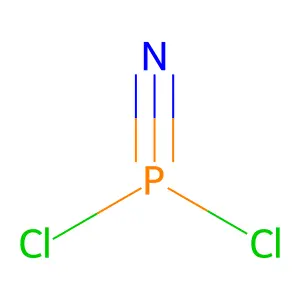
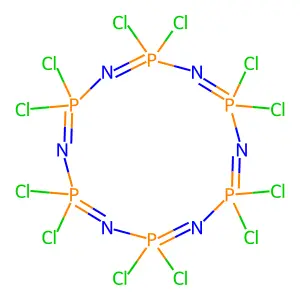
This review systematically summarized progress in building MOFs with cyclotriphosphazene (HCCP)-derived polycarboxylate ligands. The core design strategy: react HCCP's six P-Cl bonds with compounds such as hydroxybenzoates to prepare hexakis-substituted polycarboxylate ligands (e.g., hexakis(4-carboxyphenoxy)cyclotriphosphazene), then self-assemble with metal ions (Zn²⁺, Cd²⁺, Co²⁺, Cu²⁺, Zr⁴⁺, lanthanides, etc.) into 1D/2D/3D frameworks [SRC-004, SRC-005].
Why Are Cyclophosphazene Ligands Special in MOFs?
(A) The Nitrogen-Rich Phosphazene Core → Innate Gas Adsorption Affinity
The P-N skeleton of cyclophosphazenes is rich in Lewis-basic nitrogen atoms, which possess a natural affinity for CO₂ molecules—lone-pair electrons on N atoms engage in quadrupole-dipole interactions with CO₂'s electron-deficient carbon, significantly enhancing CO₂ selective adsorption [SRC-005].
In 2025, ACS *Crystal Growth & Design* reported a milestone achievement from the Gebze Technical University (Turkey) team: PCP-7, a Cu(II)-MOF built from a cyclotriphosphazene-derived tetracarboxylate ligand, demonstrating CO₂/N₂ selectivity of 41.9 (at 298K) and CO₂/CH₄ selectivity of 29.4 (at 273K) [SRC-006]. Under visible-light irradiation, PCP-7 achieved over 90% degradation of methylene blue, rhodamine B, and methyl orange, while maintaining excellent structural stability across five consecutive cycles [SRC-006].
This is a perfect demonstration of cyclophosphazene MOFs' "dual functionality"—a single framework simultaneously performing CO₂ capture and photocatalytic degradation.
(B) Rotatable P-O-C Linkages → Framework Flexibility and Structural Adaptability
Unlike traditional rigid aromatic ligands (e.g., terephthalic acid), the P-O-C linkages in cyclophosphazene ligands possess a degree of rotational freedom. This endows MOF frameworks with a certain "breathing" capacity—reversible structural adjustments upon guest molecule adsorption, rather than the "all-or-nothing" adsorption behavior typical of rigid ligands [SRC-004].
(C) Six-Directional Radiating Coordination → High-Dimensionality, High-Connectivity Topologies
Hexakis-substituted cyclophosphazene ligands radiate from the central core in six directions, naturally suited for constructing high-connectivity (>6-connected) nodes—the structural foundation for high-surface-area, high-stability MOFs. In contrast, traditional linear dicarboxylate ligands can only form simple pillared or rhombic grids [SRC-005].
Octachlorocyclotetraphosphazene: The "Next Evolution" in MOF Ligand Design
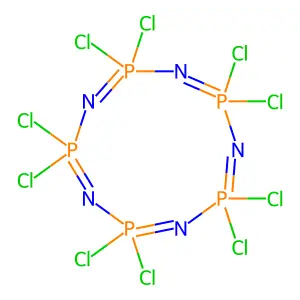
Every cyclophosphazene MOF study cited above is based on cyclotriphosphazene (HCCP)—meaning they all use hexakis-substituted ligands (six carboxyl or pyridyl "arms"). But OCCP possesses eight substitutable sites, taking the ligand's arm count from six to eight.
This is a qualitative leap in MOF structural design, not merely a quantitative increment:
OCCP 8-Arm vs. HCCP 6-Arm Ligands
| Dimension | HCCP 6-Arm Ligand | OCCP 8-Arm Ligand | MOF Implication |
|---|---|---|---|
| Coordination directions | 6 | **8** | Higher-connectivity frameworks possible |
| Maximum connectivity (c) | 6-c | **8-c** | 8-c nodes extremely rare—new topologies |
| Ring size | 6-membered | **8-membered** | Larger ligand "arm span" → larger pores |
| Ring symmetry | D3h (planar) | **Non-planar** | Non-planar core intrinsically creates chiral channels |
| Ligand flexibility | Limited | **Higher** | Greater "breathing MOF" potential |
| Framework diversity | 1D/2D/3D | **1D/2D/3D, interpenetrated nets, chiral frameworks** | Topological diversity multiplied |
Why Is OCCP's 8-Arm Ligand a "Scarce Commodity" in MOF Design?
In MOF chemistry, there is an acknowledged principle: the higher the ligand connectivity, the richer the accessible framework topologies, but the more challenging the ligand design and synthesis. The most commonly used ligands today are 2-c (linear dicarboxylates), 3-c (BTB/BTC), and 4-c (porphyrin tetracarboxylates). 6-c ligands are already "premium custom," and 8-c ligands are exceedingly rare in the literature.
OCCP can convert all eight P-Cl bonds into desired coordination functional groups (carboxyl, pyridyl, tetrazole, etc.) through a single-step nucleophilic substitution—the simplicity of this synthetic strategy makes it one of the most promising molecular platforms for practical 8-c ligand realization.
From Lab to Industry: The Commercial Prospects of OCCP-Based MOFs
CO₂ Capture: The Most Certain Market Demand
The carbon capture market is a policy-and-regulation-driven certainty. The global CCUS market stood at USD 5.1 billion in 2024, with solid-adsorbent-based capture routes (MOFs, zeolites, activated carbons) being the fastest-growing segment [SRC-003].
Cyclophosphazene MOFs' CO₂/N₂ selectivity (PCP-7: 41.9) already exceeds conventional zeolites (ZSM-5: ~10–15) and approaches the performance of top amine-functionalized MOFs (e.g., Mg-MOF-74: ~50–60) [SRC-006]. If OCCP's 8-arm ligands are validated, they could construct frameworks with higher-density Lewis-basic N sites, theoretically further enhancing CO₂/N₂ selectivity.
Photocatalytic Water Treatment: The Shortest Path to Industrial Validation
Photocatalytic degradation of dye wastewater is among the most technologically mature MOF applications. PCP-7's >90% degradation efficiency has already reached an industrially acceptable benchmark [SRC-006]. If OCCP-based MOFs can achieve performance breakthroughs in this area first, the path to industrialization is clearly defined.
Three Structural Growth Drivers for the MOF Market
1. Global carbon pricing expansion: The EU Carbon Border Adjustment Mechanism (CBAM) is fully implemented in 2026, driving surging demand for carbon capture technologies.
2. Industrial decarbonization mandates: Over 60% of Global 500 companies have committed to net-zero targets; CCUS is a critical compliance instrument.
3. MOF mass production breakthroughs: Companies such as NuMat, MOF Technologies, and BASF have advanced MOFs to ton-scale production.
Why Now? OCCP's Three "Asymmetric Advantages" in the MOF Race
Advantage 1: Cyclophosphazene MOFs Are Becoming a Recognized Field—But OCCP Is Not in It
The 2026 EJIC review devoted an entire journal issue to summarizing cyclophosphazene-based MOFs—yet 100% of the ligands discussed are based on cyclotriphosphazene. Octachlorocyclotetraphosphazene is completely ignored [SRC-004]. This means the "phosphazene MOF" track has been paved, but OCCP remains at the starting line. The first-mover advantage window is still wide open.
Advantage 2: The MOF Ligand "Connectivity Race"—OCCP Is Naturally Ahead
MOF chemistry follows a clear evolutionary path: from 2-c → 3-c → 4-c → 6-c ligands. Each step up in connectivity typically demands entirely new synthetic strategies. OCCP is inherently an 8-c ligand precursor—it doesn't need to "evolve"; it was born at the evolutionary endpoint.
Advantage 3: China Dominates MOF Research—Fastest Domestic Market Response
Chinese researchers contribute over 45% of papers retrieved under "metal-organic framework" in Web of Science. This means if OCCP is validated as a MOF ligand in China first, the industrialization response time will be much faster than in other fields. Domestic customers don't need a "prove it abroad first, then wait for domestic" cycle—entry can happen directly through local research groups.
🛒 Product Featured in This Article
🛒 Product Featured in This Article
Octachlorocyclotetraphosphazene (CAS 2950-45-0)
Formula: Cl₈N₄P₄ | MW: 459.66 | Purity: ≥98%
100 kg to metric-ton stable supply
🛒 Product Featured in This Article
Octachlorocyclotetraphosphazene (CAS 2950-45-0)
Formula: Cl8N4P4 | MW: 459.66 | Purity: >=98%
100 kg to metric-ton stable supply
Take Action: The 8-c Evolution in MOF Ligand Design Starts with OCCP
CoreyChem (Career Henan Chemical Co.) operates a mature, stable production process for octachlorocyclotetraphosphazene.
Through our in-house optimized synthetic route, we deliver high-purity OCCP at low cost, high volume, and consistent quality—from gram-scale exploration to metric-ton commercial delivery.
We invite research teams and companies in the following areas:
Your next 8-c MOF structure—we have the 8 starting points ready.