Triethylamine (TEA) (CAS 121-44-8) — Complete Guide to Properties and Applications
Category: Tertiary Amine Base | Formula: C₆H₁₅N | MW: 101.19 g/mol
---
What Is Triethylamine (TEA)?
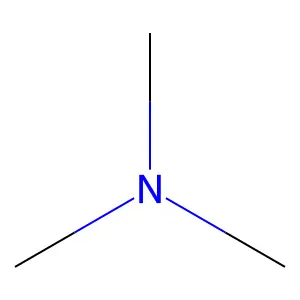
Triethylamine (TEA) (CAS 121-44-8) is a tertiary aliphatic amine with the molecular formula C₆H₁₅N and molecular weight 101.19 g/mol. [001] It is one of the most widely used organic bases in synthetic chemistry, analytical chemistry, and industrial manufacturing. TEA is a colorless, volatile liquid with a strong ammonia-like odor and is fully miscible with water and most organic solvents. [002]
TEA serves as a Brønsted base with a pKa of its conjugate acid (Et₃NH⁺) of approximately 10.75 in water. [006] This makes it sufficiently basic to deprotonate carboxylic acids (pKa ~4–5), phenols (pKa ~10), and thiols (pKa ~10–11), but not strong enough to generate enolates from ketones (pKa ~19–20) or deprotonate alcohols (pKa ~16–18). This "window" of basicity makes TEA remarkably versatile — it can neutralize acids generated during reactions without promoting unwanted side reactions with carbonyl compounds. [006]
The three ethyl groups in TEA provide steric bulk that suppresses nucleophilic side reactions. Unlike primary and secondary amines, TEA cannot form stable amides with acyl chlorides or undergo N-alkylation under typical conditions. This non-nucleophilic character is essential for its role as an acid scavenger in acylation, silylation, and sulfonylation reactions. [006]
TEA is produced industrially on a massive scale (>100,000 tons/year globally) through the vapor-phase reaction of ethanol and ammonia over a heterogeneous catalyst. Its low cost, excellent solvent properties, and ease of removal (bp 89 °C) have made it an indispensable reagent in laboratories and manufacturing facilities worldwide. [006]
---
Physical and Chemical Properties
| Property | Value | Source |
|---|---|---|
| CAS Number | 121-44-8 | [SRC-001] |
| Molecular Formula | C₆H₁₅N | [SRC-001] |
| Molecular Weight | 101.19 g/mol | [SRC-001] |
| Appearance | Colorless liquid with ammonia-like odor | [SRC-002] |
| Boiling Point | 88–89 °C | [SRC-002] |
| Melting Point | −115 °C | [SRC-002] |
| Density | 0.73 g/cm³ (20 °C) | [SRC-002] |
| pKa (conjugate acid) | ~10.75 (in water) | [SRC-006] |
| Refractive Index | 1.4010 (n²⁰ᴰ) | [SRC-002] |
| Vapor Pressure | 54 mmHg (20 °C) | [SRC-002] |
| Flash Point | −7 °C (closed cup) | [SRC-002] |
| Solubility in H₂O | 133 g/L (20 °C) | [SRC-002] |
| Solubility in Organic Solvents | Miscible with virtually all common organic solvents | [SRC-002] |
Basicity and Solvent Properties: TEA is a polar aprotic solvent (dielectric constant ~2.4) that can dissolve both polar and nonpolar compounds. As a base, it forms salts with acids that are often crystalline and useful for purification. The triethylammonium cation is large and lipophilic, making TEA salts soluble in organic solvents — a property exploited in ion-pairing chromatography and phase-transfer catalysis. [006]
---
How It Works
TEA functions as a Brønsted base and acid scavenger through proton transfer mechanisms: [006]
1. Acid Neutralization (Acid Scavenging):
In acylation reactions (e.g., formation of amides from amines and acid chlorides), HCl is generated as a byproduct. TEA neutralizes the HCl, forming triethylammonium chloride (Et₃NH⁺Cl⁻). This serves three purposes: (1) it prevents the HCl from protonating the nucleophilic amine (which would render it unreactive), (2) it drives the equilibrium toward product by removing a byproduct, and (3) it prevents acid-catalyzed side reactions like decomposition of acid-sensitive functional groups. TEA is typically used at 1.5–3.0 equiv relative to the acid chloride. [006]
2. Deprotonation of Nucleophiles:
TEA can deprotonate moderately acidic protons to generate nucleophilic anions. For example, in the Baylis-Hillman reaction, TEA deprotonates the α-position of activated alkenes (acrylates, acrylonitriles) to generate nucleophilic enolates that react with aldehydes. In silylation reactions, TEA deprotonates alcohols to alkoxides, which then react with silyl chlorides. The pKa window of TEA (conjugate acid pKa 10.75) means it can deprotonate acids with pKa < ~12 but not weaker acids. [006]
3. Nucleophilic Catalysis (Limited):
Unlike DMAP or imidazole, TEA is not a good nucleophilic catalyst for acylation because the nitrogen is sterically hindered by three ethyl groups. However, in some reactions (e.g., esterification with active esters), TEA can act as a general base catalyst by deprotonating the alcohol, increasing its nucleophilicity. [006]
4. HPLC Ion-Pairing and Silanol Masking:
In reverse-phase HPLC, TEA is added to the mobile phase (typically 0.1–0.5%) to improve peak shape for basic analytes. TEA protonates at the acidic silanol groups on the silica stationary phase, preventing unwanted interactions with basic analytes that cause peak tailing. TEA is particularly effective because it is small, highly basic, and volatile — it does not interfere with UV detection and is removed during sample workup. [006]
---
Key Applications
1. Acid Scavenger in Acylation and Silylation: The most common use. TEA neutralizes HCl, HBr, and other acids generated during acylation (amide, ester, sulfonamide formation), silylation (TBS, TMS protection), and sulfonylation (tosylation, mesylation). Its volatility allows easy removal by evaporation, unlike DIPEA which requires aqueous extraction. [006]
2. Base in Palladium-Catalyzed Cross-Coupling: TEA serves as the base in Sonogashira coupling (Pd/CuI catalyst system), Heck reactions, and some Suzuki couplings. In Sonogashira coupling, TEA performs dual roles: deprotonating the terminal alkyne to generate the copper acetylide intermediate, and neutralizing the HX byproduct from oxidative addition. TEA is preferred over inorganic bases for reactions run in organic solvents. [006]
3. HPLC Mobile Phase Modifier: 0.1% TEA is a standard additive in reverse-phase HPLC mobile phases for basic analytes. It suppresses peak tailing by masking residual silanol groups on the C18 stationary phase. TEA is preferred over other amine modifiers because it is volatile, UV-transparent, and inexpensive. [006]
4. Catalyst and Base in Baylis-Hillman Reactions: TEA catalyzes the coupling of activated alkenes (acrylates, vinyl ketones) with aldehydes to form α-methylene-β-hydroxy carbonyl compounds. The reaction proceeds through deprotonation of the activated alkene by TEA, followed by nucleophilic addition to the aldehyde and β-elimination of TEA. [006]
---
Representative Protocol: Amide Formation from Benzoic Acid and Aniline using TEA
Objective: Synthesize N-phenylbenzamide via TEA-mediated coupling using EDC·HCl. [006]
Materials:
- Benzoic acid: 5.0 mmol (0.61 g)
- Aniline: 5.5 mmol (0.51 g, 0.50 mL, 1.1 equiv)
- EDC·HCl (1-ethyl-3-(3-dimethylaminopropyl)carbodiimide hydrochloride): 6.0 mmol (1.15 g, 1.2 equiv)
- Triethylamine (TEA): 10.0 mmol (1.01 g, 1.39 mL, 2.0 equiv)
- Dry CH₂Cl₂: 25 mL
- Reaction vessel: 50 mL round-bottom flask with stir bar
Procedure:
1. Setup: In a dry 50 mL round-bottom flask, dissolve 0.61 g (5.0 mmol) of benzoic acid in 25 mL dry CH₂Cl₂. Add 1.39 mL (10.0 mmol) of TEA and stir for 2 minutes.
2. EDC Activation: Add 1.15 g (6.0 mmol) of EDC·HCl to the solution. Stir at room temperature for 10 minutes to form the O-acylisourea active ester.
3. Amine Addition: Add 0.50 mL (5.5 mmol) of aniline dropwise via syringe. Stir at room temperature for 2–4 hours. Monitor by TLC (hexane/EtOAc 3:1, product Rf ≈ 0.5) or by HPLC.
4. Workup: Transfer the reaction mixture to a separatory funnel. Wash with 1M HCl (15 mL) to remove excess TEA and EDC urea byproduct, then with saturated aqueous NaHCO₃ (15 mL) to neutralize residual acid, and finally with brine (15 mL).
5. Purification: Dry over anhydrous Na₂SO₄, filter, and concentrate. The crude product can be recrystallized from EtOH/water or purified by flash column chromatography (silica gel, hexane/EtOAc 4:1).
Expected Yield: 85–95% isolated yield (0.84–0.94 g).
Troubleshooting:
- Low yield: Ensure CH₂Cl₂ is dry — water hydrolyzes the O-acylisourea intermediate. Use freshly opened EDC·HCl — old reagent absorbs moisture and loses activity. Increase EDC·HCl to 1.5 equiv if conversion is incomplete.
- Side product (N-acylurea): The O-acylisourea can rearrange to the stable N-acylurea if the amine is slow to react. Add HOBt (1.2 equiv) or HOAt (1.2 equiv) as an additive to form a more reactive active ester and suppress N-acylurea formation.
- Difficulty removing EDC urea byproduct: The dicyclohexylurea (DCU) from DCC couplings is insoluble and easily filtered, but the ethyl(dimethylaminopropyl)urea from EDC is water-soluble. The aqueous HCl wash removes it effectively. If traces remain, wash with 0.1M citric acid instead of 1M HCl.
- Product contaminated with TEA: TEA is volatile and removed during rotary evaporation. If residual TEA is detected by NMR (triplet at δ 1.0 ppm, quartet at δ 2.5 ppm), co-evaporate with toluene (3 × 10 mL) to remove it completely. [006]
Safety Note: TEA is highly flammable (flash point −7 °C) and corrosive. All operations must be conducted in a fume hood with no ignition sources. EDC·HCl is a skin sensitizer. [002]
---
Handling and Storage
- GHS Hazard: H225: Highly flammable liquid and vapor [002], H302: Harmful if swallowed [002], H311: Toxic in contact with skin [002], H331: Toxic if inhaled [002], H314: Causes severe skin burns and eye damage [002]
- Signal Word: Danger [002]
- Pictograms: GHS02 (Flame), GHS05 (Corrosion), GHS06 (Skull and Crossbones) — based on supplier SDS data [002]
- Important Note on GHS Verification: No ECHA C&L Inventory data was found for triethylamine in the PubChem database. The GHS classification above is based on supplier Safety Data Sheets (Sigma-Aldrich, TCI). Users should verify hazard classifications with their specific supplier's SDS. [001] [002]
- Storage: Store in a cool, well-ventilated area away from heat, sparks, open flames, and ignition sources. Keep container tightly closed. TEA is highly flammable — flash point is below room temperature. Ground all equipment when transferring. TEA absorbs CO₂ from air to form triethylammonium carbonate — use freshly opened bottles for sensitive reactions or distill before use. [002]
- PPE: Nitrile gloves, safety goggles with side shields, lab coat, and closed-toe shoes. Work in a well-ventilated fume hood. Use respiratory protection if handling large quantities or if vapor exposure is possible. [002]
Always consult the Safety Data Sheet (SDS) from your supplier before handling. SDS documents are lot-specific — different purity grades may have different hazard classifications. For bulk handling, consult your institution's chemical hygiene plan and perform a job hazard analysis (JHA) before beginning work. Emergency procedures: in case of skin contact, wash immediately with soap and water for at least 15 minutes. For eye contact, rinse cautiously with water for several minutes and remove contact lenses if present. If inhaled, move to fresh air. Seek medical attention immediately if symptoms persist.
---
Regulatory & Compliance
Chemical Inventories: Triethylamine (CAS 121-44-8) is listed on major chemical inventories including the TSCA inventory in the United States, EINECS in the EU, and similar inventories in Japan (ENCS), China (IECSC), Korea (KECL), and Australia (AICS). The specific regulatory status should be verified with the appropriate national authority before importing into any jurisdiction. [002]
GHS Classification: Refer to the Handling and Storage section above. The GHS classification is based on supplier SDS data as no ECHA C&L Inventory data was available in PubChem. Specific national implementations (EU CLP Regulation, US OSHA HazCom 2012, China GB 30000 series) may have additional requirements. [001] [002]
Transport Information: TEA is classified as a flammable liquid and toxic substance for transport. UN number: UN1296. Proper shipping name: Triethylamine. Hazard class: 3 (Flammable Liquid), 6.1 (Toxic). Packing group: II. Verify all transport regulations (IATA/ICAO, IMDG, ADR/RID, 49 CFR) before shipping. [002]
Export Control: TEA is a standard industrial and research chemical produced on a massive scale. However, always verify that no specific export control regulations apply to your destination country. Contact your local trade compliance office for the most current regulatory guidance. [002]
---
Frequently Asked Questions
What is the difference between TEA and DIPEA as a base?
TEA (triethylamine) and DIPEA (diisopropylethylamine, Hünig's base) are both tertiary amines, but DIPEA is more sterically hindered. This makes DIPEA less nucleophilic — it rarely participates in unwanted N-alkylation or acylation side reactions. DIPEA is preferred for peptide coupling and reactions with highly electrophilic reagents. TEA is more volatile (bp 89 °C vs 127 °C for DIPEA) and easier to remove by evaporation. TEA is also significantly cheaper. For most routine acid scavenging, TEA is sufficient; for sensitive substrates where even trace nucleophilic side reactions are problematic, use DIPEA. [006]
Can TEA be used as a solvent for reactions?
Yes, TEA is an excellent polar aprotic solvent that is miscible with most organic compounds. It is commonly used as both solvent and base in Sonogashira couplings, where it serves dual roles. However, TEA's low boiling point (89 °C) limits its use for high-temperature reactions. For reactions above 80 °C, use DIPEA, N-methylmorpholine (NMM), or an inorganic base like K₂CO₃. TEA can also be used as a co-solvent with THF, toluene, or CH₂Cl₂ to increase polarity and improve substrate solubility. [006]
Why does my TEA smell bad, and is it still good?
TEA has a strong, unpleasant ammonia-like odor that is normal. However, if the odor becomes particularly foul or fishy, the TEA may have oxidized to form diethylamine and acetaldehyde through oxidation of the ethyl groups. TEA also absorbs CO₂ from air to form triethylammonium carbonate/ethoxycarbonate, which appears as a white solid around the bottle cap. Old TEA that has been repeatedly opened should be distilled (bp 89 °C) before use in sensitive reactions. For routine acid scavenging, slightly degraded TEA is usually acceptable. [006]
Is TEA compatible with transition metal catalysts?
TEA is generally compatible with palladium, nickel, and copper catalysts. It is the standard base for Sonogashira coupling and is used in some Heck and Suzuki reactions. However, TEA can coordinate to some metal centers and may interfere with certain catalysts. For reactions where ligand coordination is critical (e.g., asymmetric hydrogenation), avoid TEA and use inorganic bases (K₂CO₃, Cs₂CO₃) or non-coordinating organic bases (Proton Sponge). TEA can also reduce some metal salts (e.g., Pd(II) to Pd(0)) — this is sometimes beneficial but can be problematic if controlled reduction is needed. [006]
Can TEA be used in aqueous reactions?
TEA is soluble in water (133 g/L) and can be used in aqueous or biphasic systems. However, its high volatility means it will evaporate from open aqueous solutions. TEA is commonly used as a buffer component in aqueous reactions at pH 7–8. In biphasic systems, TEA partitions into both phases and can serve as a phase-transfer base. For reactions requiring strongly basic aqueous conditions, NaOH or K₂CO₃ are preferred over TEA because they provide higher pH and are non-volatile. [006]
How should TEA waste be disposed of?
TEA waste is hazardous (flammable, corrosive, toxic). Do not pour down the drain. Small quantities (<100 mL) can be neutralized slowly with dilute HCl or acetic acid in a fume hood with ice cooling. The resulting triethylammonium salt solution can be disposed of as aqueous hazardous waste. For larger quantities, collect in a dedicated flammable/corrosive waste container and arrange disposal through a licensed hazardous waste contractor. TEA vapors are toxic — never neutralize large quantities in an open vessel. [002]
---
Where to Buy
Triethylamine (CAS 121-44-8) is available in the CoreyChem catalog. [003]
View Triethylamine (CAS 121-44-8) on CoreyChem →
To request a quote, check bulk availability, or inquire about custom packaging for Triethylamine, contact our sales team at [email protected] or submit an inquiry through our website. We respond to all inquiries within one business day with pricing and availability information tailored to your specific requirements.
---
---