Thiophene (CAS 110-02-1) — Complete Guide to Properties and Applications
Category: Heterocyclic Building Block | Formula: C₄H₄S | MW: 84.14 g/mol
---
What Is Thiophene?
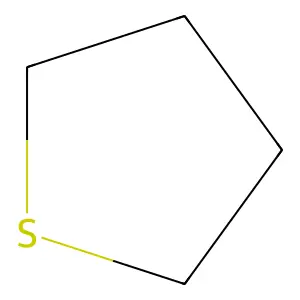
Thiophene (CAS 110-02-1) is a five-membered aromatic heterocycle containing one sulfur atom, with the molecular formula C₄H₄S and molecular weight 84.14 g/mol. [001] It was first discovered by Victor Meyer in 1882 as a contaminant in benzene derived from coal tar. Today, thiophene is one of the most important heterocyclic building blocks in medicinal chemistry, materials science, and agrochemicals, with thousands of biologically active compounds and commercial products containing the thiophene ring. [006]
Thiophene is isoelectronic with benzene — both have 6 π electrons in a cyclic conjugated system — and shares many aromatic properties with benzene, including thermal stability and susceptibility to electrophilic aromatic substitution. However, the sulfur atom introduces key differences: thiophene is more electron-rich than benzene (higher HOMO energy), making it more reactive toward electrophiles; the C-S bond is polarized, creating a molecular dipole moment; and the sulfur atom can participate in non-covalent interactions (S···O, S···N, S···π) that are important in drug-target binding. [006]
The "thienyl" group (thiophene as a substituent) is the most widely used bioisostere of the phenyl group in drug design. Thiophene-for-phenyl substitution can improve metabolic stability, modulate lipophilicity, enhance binding affinity through sulfur interactions, and alter the electronic properties of conjugated systems. These advantages have made thiophene one of the most common heterocycles in FDA-approved drugs. [006]
---
Physical and Chemical Properties
| Property | Value | Source |
|---|---|---|
| CAS Number | 110-02-1 | [SRC-001] |
| Molecular Formula | C₄H₄S | [SRC-001] |
| Molecular Weight | 84.14 g/mol | [SRC-001] |
| Appearance | Colorless liquid with characteristic odor | [SRC-002] |
| Boiling Point | 84 °C | [SRC-002] |
| Melting Point | −38 °C | [SRC-002] |
| Density | 1.06 g/cm³ (20 °C) | [SRC-002] |
| Refractive Index | 1.5289 (n²⁰ᴰ) | [SRC-002] |
| Vapor Pressure | 60 mmHg (20 °C) | [SRC-002] |
| Flash Point | −1 °C (closed cup) | [SRC-002] |
| Autoignition Temperature | ~395 °C | [SRC-002] |
| Solubility in H₂O | 3.6 g/L (20 °C) | [SRC-002] |
| Solubility in Organic Solvents | Miscible with most organic solvents | [SRC-002] |
Aromaticity and Reactivity: Thiophene has an aromatic stabilization energy of approximately 29 kcal/mol (compared to 36 kcal/mol for benzene). It undergoes electrophilic aromatic substitution primarily at the 2-position (α-position) due to better stabilization of the intermediate σ-complex. Halogenation, nitration, sulfonation, and Friedel-Crafts acylation all occur readily at C-2. The 3-position (β-position) is less reactive but can be accessed through directed metalation or halogenation of 2-substituted thiophenes followed by functional group manipulation. [006]
---
How It Works
Thiophene functions as a versatile building block through aromatic substitution and metal-catalyzed cross-coupling: [006]
1. Electrophilic Aromatic Substitution (EAS):
Thiophene is approximately 10⁵ times more reactive than benzene toward electrophiles due to its higher electron density. The sulfur atom donates electron density into the ring through resonance, activating all positions but particularly C-2. Common EAS reactions include:
- Bromination: NBS or Br₂ in AcOH gives 2-bromothiophene selectively.
- Chlorination: SO₂Cl₂ or Cl₂ with catalyst gives 2-chlorothiophene.
- Nitration: Acetyl nitrate (HNO₃/Ac₂O) at low temperature gives 2-nitrothiophene.
- Friedel-Crafts Acylation: AcCl/AlCl₃ gives 2-acetylthiophene — a key industrial intermediate.
These halogenated and functionalized thiophenes serve as substrates for further elaboration via cross-coupling, nucleophilic substitution, and reduction. [006]
2. Metal-Catalyzed Cross-Coupling:
Halogenated thiophenes (2-bromo, 2-iodo, 3-bromo) are excellent substrates for Suzuki, Stille, Negishi, and Buchwald-Hartwig couplings. The thiophene ring is compatible with standard palladium catalysis and does not poison the catalyst — unlike pyridine, which can coordinate to Pd and inhibit catalysis. Thiophene-2-boronic acid and thiophene-3-boronic acid are common coupling partners for constructing biaryl systems in drug molecules. [006]
3. Bioisosteric Replacement:
In drug design, thiophene replaces phenyl to modulate pharmacological properties:
- Lipophilicity: Thiophene is slightly more lipophilic than benzene (logP difference ~0.1–0.2), which can improve membrane permeability.
- Metabolic stability: The C-S bond is less susceptible to cytochrome P450 hydroxylation than C-H bonds in benzene, potentially improving metabolic half-life.
- Binding interactions: The sulfur lone pairs and polarizable electron cloud can form favorable interactions with protein backbone carbonyls and side chains (S···O distances ~3.0–3.5 Å).
- Electronic effects: Thiophene is a better π-donor than benzene, which can alter the electronics of conjugated pharmacophores. [006]
4. Polymerization and Materials:
Thiophene undergoes electrochemical or chemical oxidation to form radical cations that couple to form oligomers and polymers. Polythiophenes are conjugated polymers with semiconductor properties. Regioregular poly(3-hexylthiophene) (P3HT) is the most studied organic semiconductor, with hole mobilities >0.1 cm²/V·s. The polymerization mechanism involves oxidative coupling at the 2,5-positions, extending the conjugation along the polymer backbone. [006]
---
Key Applications
1. Pharmaceutical Bioisostere: Thiophene is present in numerous FDA-approved drugs including clopidogrel (Plavix, antiplatelet), duloxetine (Cymbalta, antidepressant), tiotropium (Spiriva, COPD), raloxifene (Evista, osteoporosis), and vorapaxar (antithrombotic). The thiophene ring typically replaces a phenyl group to improve metabolic stability or binding affinity. [006]
2. Organic Electronics: Polythiophene and its derivatives (P3HT, PEDOT) are benchmark materials for organic field-effect transistors (OFETs), organic photovoltaics (OPV), organic light-emitting diodes (OLEDs), and electrochromic devices. PEDOT:PSS (poly(3,4-ethylenedioxythiophene) doped with polystyrene sulfonate) is a transparent conducting polymer used in touch screens, solar cells, and antistatic coatings. [006]
3. Agrochemicals: Thiophene-containing agrochemicals include thiamethoxam (neonicotinoid insecticide), thifensulfuron-methyl (sulfonylurea herbicide), and flufenacet (herbicide). The thiophene ring enhances soil mobility, target-site binding, and metabolic stability compared to phenyl analogs. Over 30 commercial agrochemicals contain the thiophene substructure. [006]
4. Fragrance and Flavor Chemistry: Thiophene derivatives contribute to the aroma of coffee, roasted meat, and popcorn. 2-Acetylthiophene has a sweet, burnt odor used in flavor formulations. Thiophene-based compounds are GRAS (Generally Recognized As Safe) flavor ingredients at low concentrations. [006]
---
Representative Protocol: Friedel-Crafts Acylation of Thiophene with Acetyl Chloride
Objective: Synthesize 2-acetylthiophene via Friedel-Crafts acylation. [006]
Materials:
- Thiophene: 25.0 mmol (2.10 g, 2.03 mL)
- Acetyl chloride: 27.5 mmol (2.16 g, 1.95 mL, 1.1 equiv)
- Anhydrous aluminum chloride (AlCl₃): 30.0 mmol (4.00 g, 1.2 equiv)
- Dry 1,2-dichloroethane (DCE): 30 mL
- Reaction vessel: 100 mL three-neck round-bottom flask with magnetic stirrer, addition funnel, and N₂ inlet
Procedure:
1. Setup: In a dry 100 mL three-neck flask equipped with a stir bar, addition funnel, and N₂ inlet, suspend 4.00 g (30.0 mmol) of anhydrous AlCl₃ in 30 mL dry DCE under N₂. Cool to 0 °C in an ice bath.
2. Thiophene Addition: Add 2.10 g (25.0 mmol) of thiophene dropwise via syringe over 5 minutes with stirring. The mixture will turn dark red-brown.
3. Acetyl Chloride Addition: Add 1.95 mL (27.5 mmol) of acetyl chloride dropwise via addition funnel over 15 minutes, maintaining the temperature below 10 °C. Stir at 0 °C for 30 minutes, then warm to room temperature and stir for an additional 1 hour.
4. Monitoring: Analyze by TLC (hexane/EtOAc 4:1, product Rf ≈ 0.4) or GC-MS.
5. Quench: Carefully pour the reaction mixture onto 50 g of crushed ice in a beaker (caution: exothermic). Add 20 mL of 6M HCl to dissolve aluminum salts. Transfer to a separatory funnel.
6. Workup: Separate the organic phase. Wash with saturated aqueous NaHCO₃ (20 mL), water (20 mL), and brine (20 mL). Dry over anhydrous Na₂SO₄, filter, and concentrate.
7. Purification: Purify by flash column chromatography (silica gel, hexane/EtOAc 4:1) or vacuum distillation (bp 77–78 °C/10 mmHg).
Expected Yield: 75–90% isolated yield (2.34–2.81 g).
Troubleshooting:
- Low regioselectivity (3-acetylthiophene formed): The 2-position is strongly preferred, but some 3-substitution can occur with very bulky acyl chlorides or at high temperatures. Use lower temperature (0 °C) and avoid sterically hindered acyl chlorides.
- Polyacylation: Excess acyl chloride and extended reaction times can lead to diacetylation. Use exactly 1.1 equiv of acyl chloride and limit reaction time to 1.5 h at room temperature.
- Product decomposition during workup: 2-Acetylthiophene is somewhat acid-sensitive. Neutralize promptly during quench and avoid prolonged exposure to strong acid.
- Thiophene polymerization: Thiophene can polymerize under strongly acidic conditions. Keep reaction time short and temperature low. If black polymeric material forms, filter it out during workup. [006]
Safety Note: Thiophene is highly flammable (flash point −1 °C). AlCl₃ reacts violently with water. Acetyl chloride is corrosive and generates HCl gas. Conduct all operations in a fume hood with no ignition sources. [002]
---
Handling and Storage
- GHS Hazard: H225: Highly flammable liquid and vapor (98.5% of suppliers) [001], H315: Causes skin irritation (68.8%) [001], H302: Harmful if swallowed (67%) [001], H412: Harmful to aquatic life with long lasting effects (57%) [001], H319: Causes serious eye irritation (51.2%) [001], H318: Causes serious eye damage (36.1%) [001], H335: May cause respiratory irritation (36.1%) [001], H332: Harmful if inhaled (30.2%) [001], H312: Harmful in contact with skin (19.7%) [001], H331: Toxic if inhaled (13.6%) [001]
- Signal Word: Danger [001]
- Pictograms: GHS02 (Flame), GHS07 (Exclamation Mark), GHS05 (Corrosion), GHS09 (Environmental Hazard) — inferred from H-codes [001]
- Storage: Store in a cool, well-ventilated area away from heat, sparks, open flames, and ignition sources. Keep container tightly closed. Thiophene is highly flammable — flash point is below room temperature. Ground all equipment when transferring. Store under inert atmosphere (N₂) if long-term storage is required. The liquid is stable indefinitely when stored properly. [002]
- PPE: Nitrile gloves, safety goggles with side shields, lab coat, and closed-toe shoes. Work in a well-ventilated fume hood. Use respiratory protection if handling large quantities or if vapor exposure is possible. [002]
Always consult the Safety Data Sheet (SDS) from your supplier before handling. SDS documents are lot-specific — different purity grades may have different hazard classifications. For bulk handling, consult your institution's chemical hygiene plan and perform a job hazard analysis (JHA) before beginning work. Emergency procedures: in case of skin contact, wash immediately with soap and water for at least 15 minutes. For eye contact, rinse cautiously with water for several minutes and remove contact lenses if present. If inhaled, move to fresh air. Seek medical attention if symptoms persist.
---
Regulatory & Compliance
Chemical Inventories: Thiophene (CAS 110-02-1) is listed on major chemical inventories including the TSCA inventory in the United States, EINECS in the EU, and similar inventories in Japan (ENCS), China (IECSC), Korea (KECL), and Australia (AICS). The specific regulatory status should be verified with the appropriate national authority before importing into any jurisdiction. [002]
GHS Classification: Refer to the Handling and Storage section above for the Globally Harmonized System hazard classification based on ECHA C&L Inventory data (391 company reports from 18 notifications). The GHS classification is harmonized across most jurisdictions, but specific national implementations may have additional requirements. [001]
Transport Information: Thiophene is classified as a flammable liquid for transport. UN number: UN2414. Proper shipping name: Thiophene. Hazard class: 3 (Flammable Liquid). Packing group: II. Verify all transport regulations (IATA/ICAO, IMDG, ADR/RID, 49 CFR) before shipping. [002]
Export Control: Thiophene is a standard industrial and research chemical. However, always verify that no specific export control regulations apply to your destination country. Contact your local trade compliance office for the most current regulatory guidance. [002]
---
Frequently Asked Questions
Why is thiophene such a popular bioisostere for benzene?
Thiophene and benzene are isoelectronic (both 6 π electrons) and similar in size, so they can often be interchanged without major disruption to molecular shape. However, thiophene offers several advantages: (1) The sulfur atom is larger and more polarizable than CH, enabling favorable non-covalent interactions with proteins. (2) Thiophene is more electron-rich, which can improve binding to electron-poor receptor sites. (3) The C-S bond is less reactive metabolically than C-H, potentially improving half-life. (4) Thiophene can improve solubility compared to benzene. These factors have made thiophene the most common phenyl bioisostere in drug discovery. [006]
What is the difference between thiophene and furan?
Thiophene and furan are both five-membered heterocycles, but thiophene has sulfur while furan has oxygen. Thiophene is more aromatic and stable than furan — thiophene's aromatic stabilization energy is ~29 kcal/mol versus ~16 kcal/mol for furan. Furan is more reactive and susceptible to acid-catalyzed ring opening (e.g., during protonation or Diels-Alder reactions), while thiophene is stable under most reaction conditions. In drug design, thiophene is generally preferred over furan due to its greater metabolic stability. Furan-containing drugs are rare because furans can be metabolically activated to reactive epoxides. [006]
Can thiophene undergo metal-catalyzed C–H activation?
Yes, thiophene undergoes directed C–H activation at the 2-position (and to a lesser extent at the 3-position) using palladium, ruthenium, and rhodium catalysts. The C–H bond at C-2 is more acidic and more accessible than at C-3. Directed metalation with palladium acetate and a directing group (e.g., carboxamide, pyridine) enables selective functionalization. Undirected C–H arylation of thiophene has also been achieved using palladium catalysts with phosphine ligands. These methods are valuable for late-stage diversification of thiophene-containing drug candidates. [006]
Is thiophene present in crude oil and coal tar?
Yes, thiophene and its alkylated derivatives (benzothiophene, dibenzothiophene) are naturally occurring sulfur compounds in fossil fuels. They are removed during petroleum refining through hydrodesulfurization (HDS) — a process that converts thiophenic sulfur to H₂S using cobalt-molybdenum or nickel-molybdenum catalysts at high temperature and pressure. The thiophene content of crude oil varies from <0.1% to >5% depending on the source. This natural occurrence was how Victor Meyer first discovered thiophene — it was present as a contaminant in benzene isolated from coal tar. [006]
What is the best way to synthesize substituted thiophenes?
For 2-substituted thiophenes, electrophilic aromatic substitution (halogenation, acylation, nitration) is the most direct route. For 3-substituted thiophenes or more complex patterns, cross-coupling of halogenated thiophenes is preferred: (1) Halogenate at C-2 using NBS or Br₂. (2) Perform Suzuki, Stille, or Negishi coupling to install the desired substituent. (3) For C-3 substitution, first block C-2 with a removable group (e.g., bromine), then substitute at C-3, and finally remove the blocking group. The Gewald reaction (ketone + malononitrile + elemental sulfur) is the most versatile method for synthesizing 2-aminothiophenes from non-thiophene starting materials. [006]
Does thiophene have any odor or environmental concerns?
Thiophene has a distinctive unpleasant odor reminiscent of benzene or naphthalene, but more pungent. The odor threshold is low (~0.0001 ppm), so even small spills are noticeable. Thiophene is harmful to aquatic life with long-lasting effects (H412, reported by 57% of suppliers in ECHA C&L). Do not release to waterways. Thiophene is biodegradable under aerobic conditions, but biodegradation is slow. Waste containing thiophene should be disposed of as hazardous liquid waste. In the atmosphere, thiophene reacts with hydroxyl radicals with a half-life of approximately 4 hours. [002]
---
Where to Buy
Thiophene (CAS 110-02-1) is available in the CoreyChem catalog. [003]
View Thiophene (CAS 110-02-1) on CoreyChem →
To request a quote, check bulk availability, or inquire about custom packaging for Thiophene, contact our sales team at [email protected] or submit an inquiry through our website. We respond to all inquiries within one business day with pricing and availability information tailored to your specific requirements.
---
---